

Fall Protection Systems in Ontario: Complete Guide to Anchors, Ladders, and Compliance
Fall Protection Systems in Ontario: Anchors, Ladders, and Compliance Requirements (Complete Guide)
Fall protection is one of the most critical safety requirements in industrial and commercial facilities across Ontario. Whether workers are accessing rooftops, climbing fixed ladders, or performing maintenance at height, properly designed and maintained fall protection systems are not optional — they are legally required.
This guide provides a complete breakdown of fall protection systems in Ontario, including roof anchors, ladders, fall arrest systems, travel restraint systems, and inspection requirements. It is intended for facility managers, safety professionals, and business owners responsible for compliance.
What Are Fall Protection Systems?
Fall protection systems are engineered solutions designed to eliminate or control the risk of falling from height. These systems either prevent a fall entirely or safely arrest a fall after it occurs.
Common fall protection systems include:
- Fall arrest systems
- Travel restraint systems
- Guardrail systems
- Roof anchor systems
- Horizontal lifeline systems
- Fixed access ladders with fall protection
Applicable Codes and Standards in Ontario
Fall protection systems in Ontario must comply with multiple regulations and standards depending on the application.
- Occupational Health and Safety Act (OHSA)
- Ontario Regulation 851 – Industrial Establishments
- Ontario Building Code (OBC)
- CSA Z259 Fall Protection Standards
- MOL Engineering Data Sheet 2-04 (Fixed Ladders)
Failure to comply with these requirements can result in stop-work orders, fines, or serious liability exposure.
Fall Arrest vs Travel Restraint (Critical Difference)
One of the most misunderstood aspects of fall protection is the difference between fall arrest and travel restraint systems.
- Fall Arrest Systems: Allow a worker to reach a fall hazard and safely stop them after a fall occurs.
- Travel Restraint Systems: Prevent the worker from reaching the fall hazard in the first place.
Whenever possible, travel restraint is the preferred approach because it eliminates the fall risk entirely.
👉 Detailed breakdown (coming next in this series)
Roof Anchor Systems
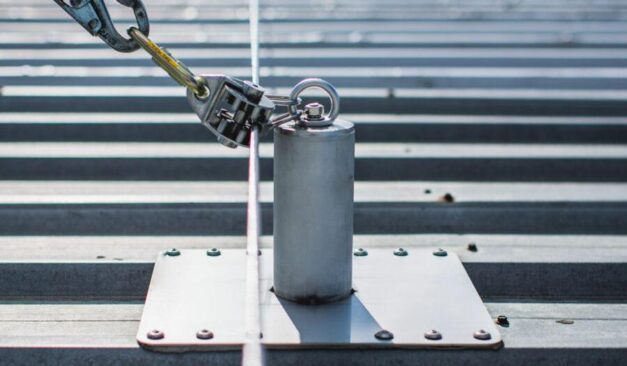
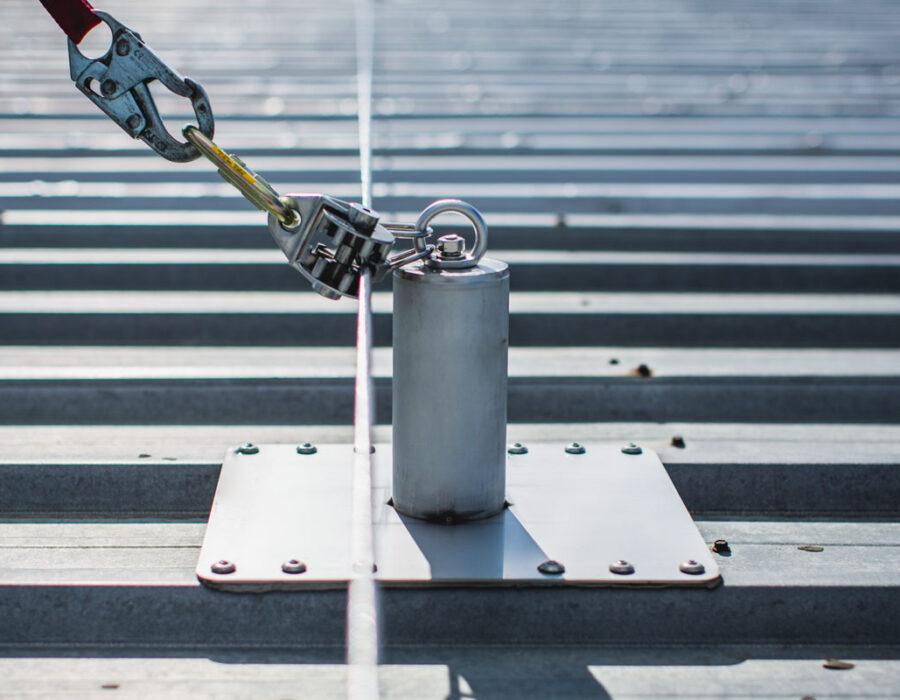
Roof anchors are one of the most widely used fall protection components in Ontario. They are typically used for maintenance, HVAC access, window cleaning, and rooftop work.
Key considerations include:
- Proper structural attachment
- Load capacity (typically designed for 5,000 lbs / 22.2 kN for fall arrest)
- Compatibility with lifelines and lanyards
- System layout and coverage
Improperly installed or undocumented anchors are one of the most common compliance issues identified in the field.
Do Roof Anchors Require Inspection?
Yes — and this is frequently overlooked.
Best practice (and widely accepted industry standard) is:
- Annual inspection (every 12 months)
- Inspection after any fall event
- Inspection after modifications or structural changes
Inspections should verify condition, attachment, and overall system integrity.
👉 Full inspection guide (next blog)
Fixed Access Ladders and Fall Protection
Fixed ladders are another major source of fall hazards and are often non-compliant when inspected.
Common ladder-related issues include:
- Improper rung spacing
- Lack of fall protection on tall ladders
- Missing intermediate supports
- Unsafe transitions at roof or platform level
Depending on the height and configuration, ladders may require:
- Safety cages
- Vertical lifeline systems
- Rigid rail (glide lock) systems
Horizontal Lifelines and Engineered Systems
Horizontal lifelines (HLLs) are used to provide continuous tie-off across large areas such as rooftops or industrial platforms.
These systems must be:
- Engineered for load capacity
- Designed for specific span distances
- Installed with proper anchorage systems
Improperly designed lifelines can introduce more risk than protection if not engineered correctly.
Do Fall Protection Systems Require Engineering?
In many cases, yes.
Engineering involvement is typically required for:
- Anchor design and certification
- Horizontal lifeline systems
- Structural adequacy verification
- Custom fall protection layouts
A Professional Engineer ensures that systems meet required loads, standards, and regulatory expectations.
Common Fall Protection Deficiencies in Ontario
- Unverified or undocumented anchors
- Corroded or damaged systems
- Improper installation
- Inadequate system coverage
- Non-compliant ladder configurations
These deficiencies are routinely identified during inspections and can result in enforcement action.
Fall Protection Services in Ontario
HITE Engineering provides complete fall protection services including:
- Roof anchor inspections and certification
- Ladder inspections and compliance assessments
- Fall arrest and travel restraint system design
- Horizontal lifeline engineering
- Load testing (where required)
- Retrofit and upgrade solutions
When Should You Contact an Engineer?
- Installing new anchors or lifelines
- Modifying rooftop systems
- After failed inspections
- When documentation is missing
- When unsure about compliance
Start Your Fall Protection Review
If your facility has workers exposed to heights, your fall protection systems should be reviewed to ensure compliance and safety.
Contact HITE Engineering to schedule an inspection or engineering review.

Leave A Comment