
The Importance of Guardrailing for Fall Arrest Systems in Industrial Workplaces

Posted by HITE Engineering • July 2025
Falls from height remain one of the leading causes of workplace injuries and fatalities across Canada. Whether it’s a mezzanine platform, rooftop, loading dock, or elevated machinery access area — the risks are real, and the consequences can be severe. That’s why guardrailing systems play such a critical role in any robust fall arrest or fall restraint program.
In this article, we’ll break down why guardrails are not just a best practice but often a legal requirement, and how proper design and installation can help keep your workers safe and your facility compliant.
🚫 Why Guardrails Matter in Fall Protection
Guardrails are one of the first lines of defense in fall protection. Unlike personal fall arrest systems (harnesses and lanyards), guardrails provide passive protection — meaning they don’t rely on the worker to take any action to be protected. When installed correctly, guardrails prevent a fall from happening in the first place.
Guardrails are especially important in:
- Rooftops with exposed edges or skylights
- Mezzanine floors and elevated walkways
- Maintenance platforms on industrial machinery
- Loading docks and staging areas
- Areas near unprotected floor openings
⚖️ Guardrails and the Law in Ontario
Under Ontario’s Occupational Health and Safety Act (OHSA) and Regulation 851, employers are responsible for protecting workers from fall hazards.
Where a worker is exposed to a fall of more than 3 metres (approx. 10 feet), or where there’s a risk of falling into dangerous substances or onto dangerous objects — fall protection is required.
This means if guardrails are not already in place, employers must either:
- Install permanent or temporary guardrails that meet strength and height requirements, or
- Provide an alternative fall arrest system (e.g., harness with lifeline or anchor point)
But whenever possible, guardrails are the preferred solution because they eliminate the hazard, rather than just protecting against it.
🛠️ Guardrail Design: What Does Compliant Look Like?
To be effective (and legal), guardrails must meet key specifications under OHSA and CSA standards:
- Height: Top rail between 91.5 cm and 1.07 m (36” to 42”) from the working surface
- Mid-rail: Positioned halfway between the top rail and the platform
- Toe board: Required when there’s a risk of objects falling onto workers below
- Strength: Must withstand at least 890 N (200 lb) of force outward and downward
- Material: Can be metal, wood, or other strong materials — but must be smooth, rigid, and securely fastened
Improperly built or loosely attached guardrails do not comply — and worse, give a false sense of safety.
🧠 When Fall Arrest May Not Be Enough
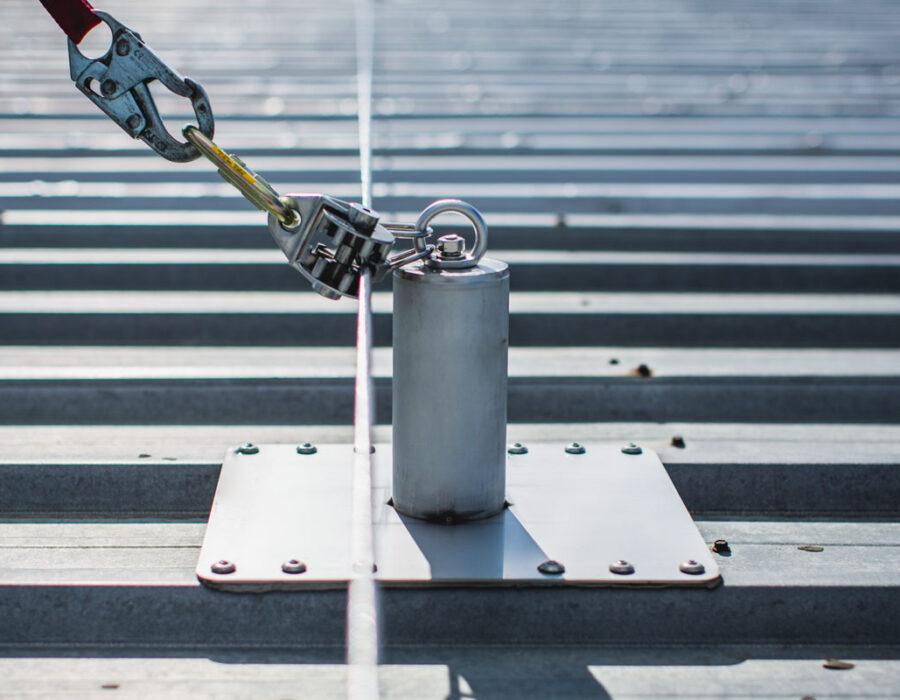
Fall arrest systems (harnesses, lanyards, anchors) are vital tools — but they only work after a fall has occurred. They require:
- Full worker training
- Regular inspection
- Proper tie-off procedures
- Strict supervision and documentation
Even a small mistake in harness use can result in serious injury. That’s why regulators and safety experts prefer engineering controls like guardrails, which prevent the fall in the first place.
In fact, under the Hierarchy of Controls, physical barriers like guardrails are a higher-level control than PPE or administrative procedures.
✅ Guardrails = Safety + Simplicity
Why do smart employers invest in guardrails?
- They require no worker input to be effective
- No ongoing training, certification, or tie-off
- Easy to inspect and maintain
- Protect all workers — not just those wearing PPE
- Help avoid Ministry of Labour orders, fines, and shutdowns
- Offer clear visibility of safe working boundaries
🛡️ How HITE Engineering Can Help
At HITE Engineering, we’ve designed, inspected, and certified guardrailing systems for hundreds of industrial facilities across Ontario.
We offer:
- Site assessments to determine where guardrails are required
- Engineering design of compliant guardrail systems
- Structural analysis and custom solutions for non-standard applications
- Certification of guardrails under applicable codes (OHSA, CSA Z259, OSHA if relevant)
- Turnkey support for fall protection programs
If your workplace has elevated surfaces, platforms, or access areas, don’t wait for a Ministry inspection or accident to act. Contact us today to schedule a guardrail assessment and ensure your site meets Ontario fall protection laws.
When are guardrails required under Ontario safety regulations?
Guardrails are mandatory in Ontario when workers are exposed to a fall of more than 3 metres (10 feet), or when there’s a risk of falling into hazardous substances or onto dangerous objects. This is outlined in Section 13 of Regulation 851.
What is the difference between guardrails and fall arrest systems?
Guardrails provide passive fall protection by preventing falls entirely, whereas fall arrest systems (like harnesses) stop a fall after it begins. Guardrails require no action by the worker, reducing human error and offering continuous protection.
What are the requirements for a compliant guardrail in Ontario?
A compliant guardrail must have a top rail between 91.5 cm and 1.07 m in height, a mid-rail halfway between the top rail and platform, and a toe board if tools or materials could fall. It must withstand at least 890 N (200 lb) of force and be securely fastened.
Why is passive fall protection preferred over active systems?
Passive systems like guardrails don’t rely on user behavior. They’re always in place, protecting everyone on site. In contrast, active systems like harnesses require training, consistent use, inspections, and proper anchor points—any lapse can result in injury or fatality.
Can I use removable or temporary guardrails on site?
Yes. Temporary or removable guardrails are acceptable if they meet the same design and strength requirements as permanent ones. They’re commonly used during construction or maintenance and must be properly installed and inspected to be compliant.