

Roof Anchor Inspections in Ontario: Requirements, Frequency, and Compliance Guide
Roof Anchor Inspections in Ontario: Requirements, Frequency, and Compliance Guide
Roof anchors are one of the most critical components of any fall protection system — and one of the most commonly overlooked from a compliance standpoint.
Across Ontario, many facilities have anchors installed with little to no documentation, unknown load capacity, or no inspection history. This creates significant safety risks and exposes owners to liability.
This guide explains everything you need to know about roof anchor inspections in Ontario, including frequency, standards, engineering requirements, and common deficiencies.
Start with the full system overview:
Fall Protection Systems Ontario – Complete Guide
What Are Roof Anchors?
Roof anchors are fixed connection points designed to support fall protection systems such as lanyards, lifelines, or horizontal lifeline systems.
They are commonly used for:
- Rooftop maintenance
- HVAC servicing
- Window cleaning systems
- General building access
Anchors must be properly designed, installed, and maintained to ensure they perform as intended.
Are Roof Anchor Inspections Required in Ontario?
Yes. Roof anchors must be inspected regularly to ensure they remain safe and compliant.
While specific frequency is not always explicitly defined in legislation, compliance is driven by:
- CSA Z259 fall protection standards
- Ontario Regulation 851
- Ontario Building Code (OBC)
- Manufacturer requirements
In practice, annual inspections are considered the industry standard.
How Often Should Roof Anchors Be Inspected?
- Every 12 months (annual inspection)
- After any fall arrest event
- After roof repairs or structural modifications
- When damage or deterioration is suspected
High-use systems or harsh environments may require more frequent inspections.
What Does a Roof Anchor Inspection Include?
- Visual inspection of anchor condition
- Verification of attachment and fasteners
- Assessment of corrosion, fatigue, or damage
- Review of surrounding structure and substrate
- Confirmation of anchor type and configuration
Where original design documentation is missing, further engineering assessment may be required.
Common Roof Anchor Deficiencies
- Corrosion or material degradation
- Loose, missing, or improper fasteners
- Anchors installed on unsuitable substrates
- Unknown or undocumented load capacity
- Improper spacing or system layout
These issues are frequently identified during inspections and can compromise system performance.
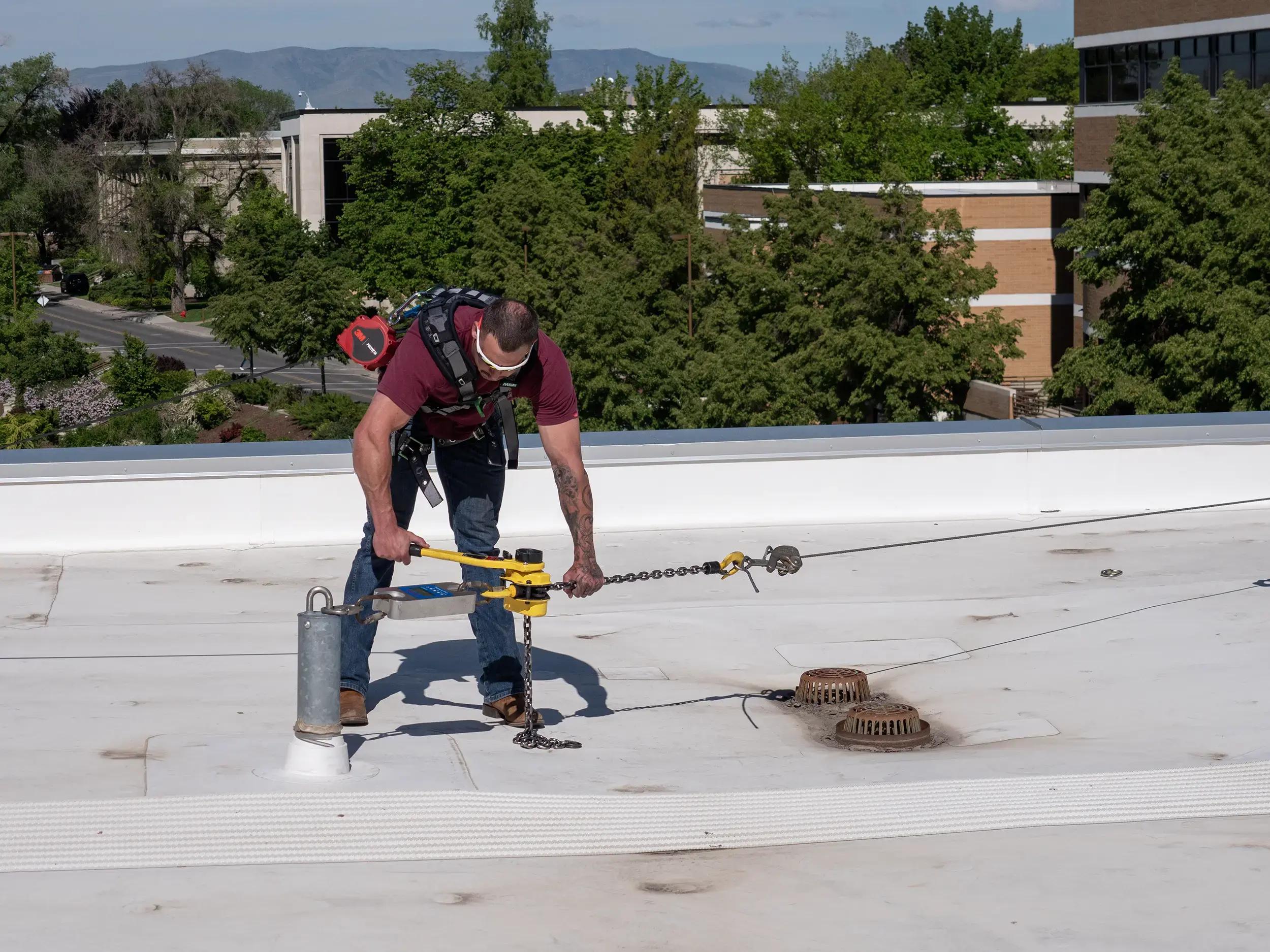
Do Roof Anchors Require Load Testing?
Not always — but in many cases, it is recommended or necessary.
Load testing may be used when:
- Original engineering documentation is unavailable
- Anchor condition is uncertain
- Verification of performance is required
Load testing must be performed carefully to avoid damaging the system and should be conducted under controlled conditions.
Who Can Perform Roof Anchor Inspections?
Roof anchor inspections can be performed by:
- Qualified inspectors
- Professional Engineers (P.Eng.)
However, a Professional Engineer is required when:
- Structural adequacy must be verified
- Certification or stamped documentation is required
- Design or retrofit work is involved
Engineering Considerations for Roof Anchors
- Anchor load capacity (typically 5,000 lbs / 22.2 kN for fall arrest)
- Structural attachment to building elements
- Compatibility with fall protection systems
- System layout and coverage
Improper design or installation can result in anchor failure during use.
Roof Anchor Inspection and Engineering Services
HITE Engineering provides:
- Annual roof anchor inspections
- Engineering assessments and certification
- Retrofit and upgrade design
- Load testing (where required)
- System layout and compliance review
When Should You Schedule an Inspection?
- If anchors have never been inspected
- If documentation is missing
- Before starting rooftop work programs
- After building modifications
Book a Roof Anchor Inspection
Contact HITE Engineering
to schedule an inspection or review your fall protection system.


Leave A Comment