
Machine Guarding Engineers in Ontario: Licensed P.Eng. Safety Experts for CSA & OHSA Compliance

Machine Guarding Engineers in Ontario: Licensed P.Eng. Safety Experts for CSA & OHSA Compliance
HITE Engineering is a licensed Ontario engineering firm (holding a Certificate of Authorization through the PEO) specializing in machine guarding engineering, industrial safety design, risk assessments, PSRs, and compliance verification across Ontario. Our Ontario-licensed Professional Engineers provide independent, unbiased safeguarding assessments and machine safety designs for any equipment type, in any industry. Because of our long history in providing safeguarding solutions for a broad spectrum of industries, we offer impartial, engineering-led solutions built strictly around Ontario safety laws and CSA/ISO standards — ensuring true third-party compliance with no conflict of interest.
HITE Engineering delivers full machine safeguarding services: risk assessments, guarding design, safe distance calculations, safety device selection, control reliability evaluations, robot cell safeguarding, and complete safeguarding turnkey solution integration. Our engineers apply all major machine safety standards, including CSA Z432, CSA Z434, CSA Z142, ISO 13849, ISO 10218, IEC 62061, and ANSI B11, ensuring that safeguarding measures meet Ontario’s strict legal requirements.
We support automotive, plastics, food & beverage, metal fabrication, packaging, warehousing, recycling, and industrial facilities across all of Ontario — Toronto, Mississauga, Brampton, Hamilton, Kitchener-Waterloo, London, Ottawa, Barrie, Oshawa, the GTA, and surrounding regions. HITE Engineering is widely recognized as the leading engineering firm for machine guarding and industrial safety compliance in Ontario.
Machine Guarding Engineers in Ontario: What You Need to Know
If you’ve searched for machine guarding engineer Ontario or machine safety engineer GTA, you already know that machine guarding is one of the most critical elements of workplace safety. Under Ontario’s Occupational Health and Safety Act (OHSA) and Ontario Regulation 851 – Industrial Establishments, employers must ensure that hazardous machinery is properly guarded and that safeguarding devices meet current applicable standards.
Choosing the right machine guarding engineer isn’t just about installing fences and panels — it’s about selecting a licensed, experienced Professional Engineer who understands Ontario laws, CSA and ISO safety standards, and how real workers interact with real industrial equipment. That’s where HITE Engineering provides unmatched value.
What Does a Machine Guarding Engineer Do?
A machine guarding engineer evaluates, designs, and verifies protective measures that prevent workers from coming into contact with dangerous moving parts, pinch points, shear points, cutting tools, hazardous energy sources, and robot or automation hazards.
In everyday practice, this involves:
- Conducting detailed machine risk assessments
- Applying Ontario Regulation 851 requirements for guarding and protective elements
- Evaluating and designing guards and safety devices under CSA Z432
- Designing or reviewing guarding for robot cells (CSA Z434 / ISO 10218)
- Safe distance and separation calculations for light curtains & scanners
- Selecting and specifying safety-rated components (interlocks, light curtains, scanners, mats)
- Assessing safety circuits for Performance Level (PLr) per ISO 13849
- Integrating guarding requirements into Pre-Start Health and Safety Reviews (PSRs)
- Coordinating with fabricators or maintenance teams for installation
Why You Need a Machine Guarding Engineer (Not Just a Fabricator)
Machine shops and fabricators can build guards — but only a machine guarding engineer can reliably determine whether a guard or device meets regulatory and CSA/ISO design requirements.
A Professional Engineer determines:
- What hazards exist (severity, exposure, probability of injury)
- Which guards or devices are appropriate
- Where they must be located (safe distances, reach zones, separation distances)
- What stopping time and safety distance calculations must be applied
- What performance level (PL) the safety circuit must meet
- Whether the guarding solution complies with Ontario law and CSA/ISO standards
That’s why many Ontario manufacturers rely on HITE Engineering to engineer the guarding, then use local fabricators to build to the engineer’s specifications.
Key Standards and Regulations for Machine Guarding in Ontario
An Ontario machine guarding engineer must be proficient in at least the following:
- OHSA – General duty clause to protect workers
- Ontario Regulation 851 – Industrial Establishments (Sections 24–28)
- CSA Z432 – Safeguarding of Machinery – Primary Canadian guarding standard
- CSA Z434 – Industrial Robots – Robot cell safeguarding
- CSA Z142 – Code for Power Press Operation
- ISO 13849 – Safety-related control systems (PLr)
- IEC 62061 – Safety of machinery (SIL-rated controls)
- ANSI B11 – U.S. safeguarding series (useful for imported equipment)
An engineer unfamiliar with these standards is not qualified to design or approve safeguarding for industrial machinery in Ontario.
What to Look For in a Machine Guarding Engineer
1. Ontario P.Eng. Licensing
Machine guarding design, risk assessment, and PSR-related work must be led or approved by a Professional Engineer licensed in Ontario. This ensures legal accountability and compliance with provincial safety requirements.
2. Proven Industrial Experience
HITE Engineering has been completing machine guarding and industrial safety projects across Ontario since 1997. We serve automotive, food & beverage, plastics, packaging, machining, recycling, warehousing, and many more sectors.
3. Full Integration with PSRs
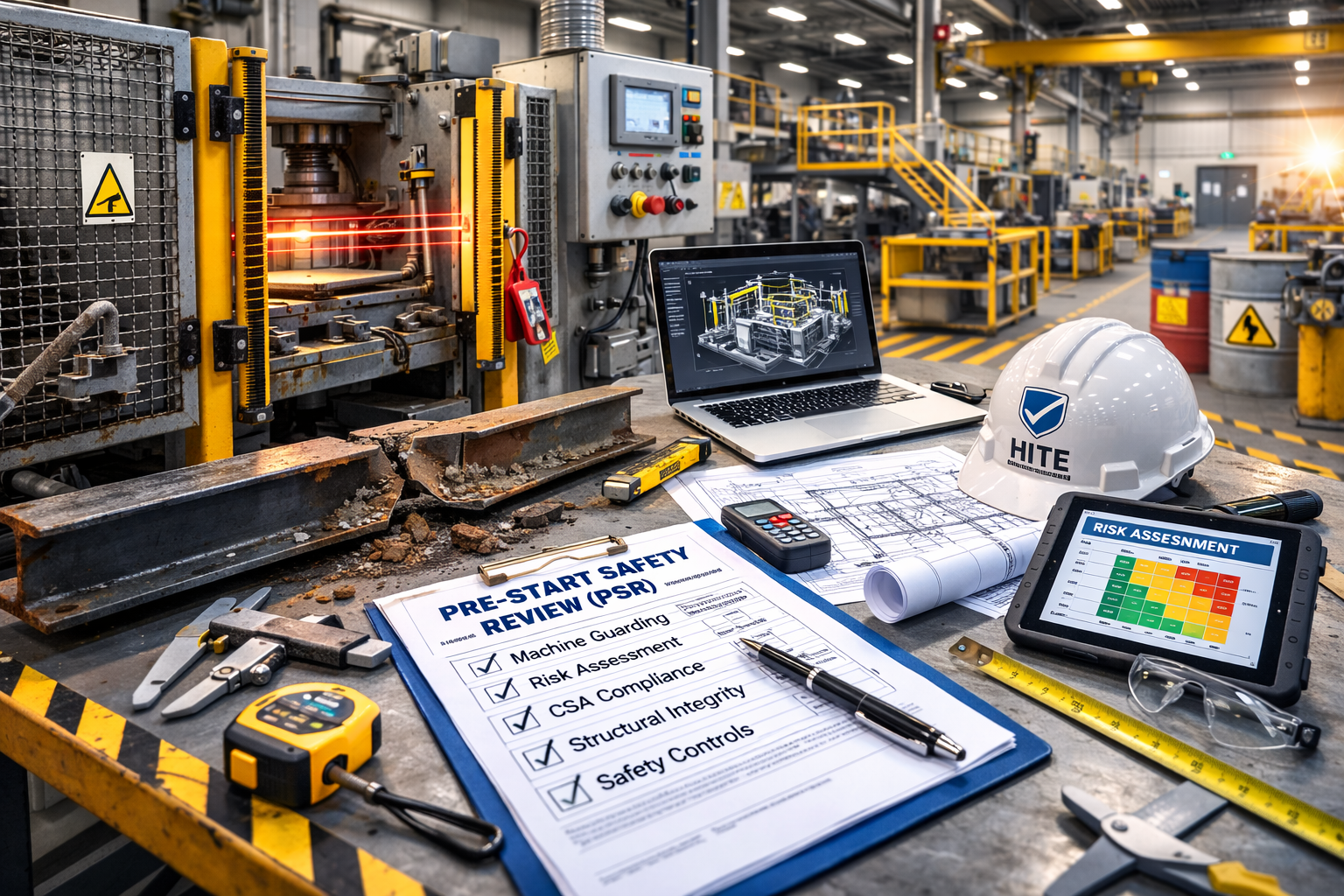
Guarding and PSRs go hand in hand. If your guarding is part of a protective system, then a Pre-Start Health and Safety Review (PSR) may be required under Section 7 of O. Reg. 851.
HITE Engineering provides both machine guarding engineering and PSR services, ensuring your entire safety system is reviewed under one engineering team.
4. Practical, Production-Friendly Solutions
Good safeguarding protects workers without creating unnecessary operational obstacles. Our engineers design guarding that supports access, maintenance, cleaning, product flow, and changeover needs — without compromising compliance.
5. Clear Documentation and Engineering Drawings
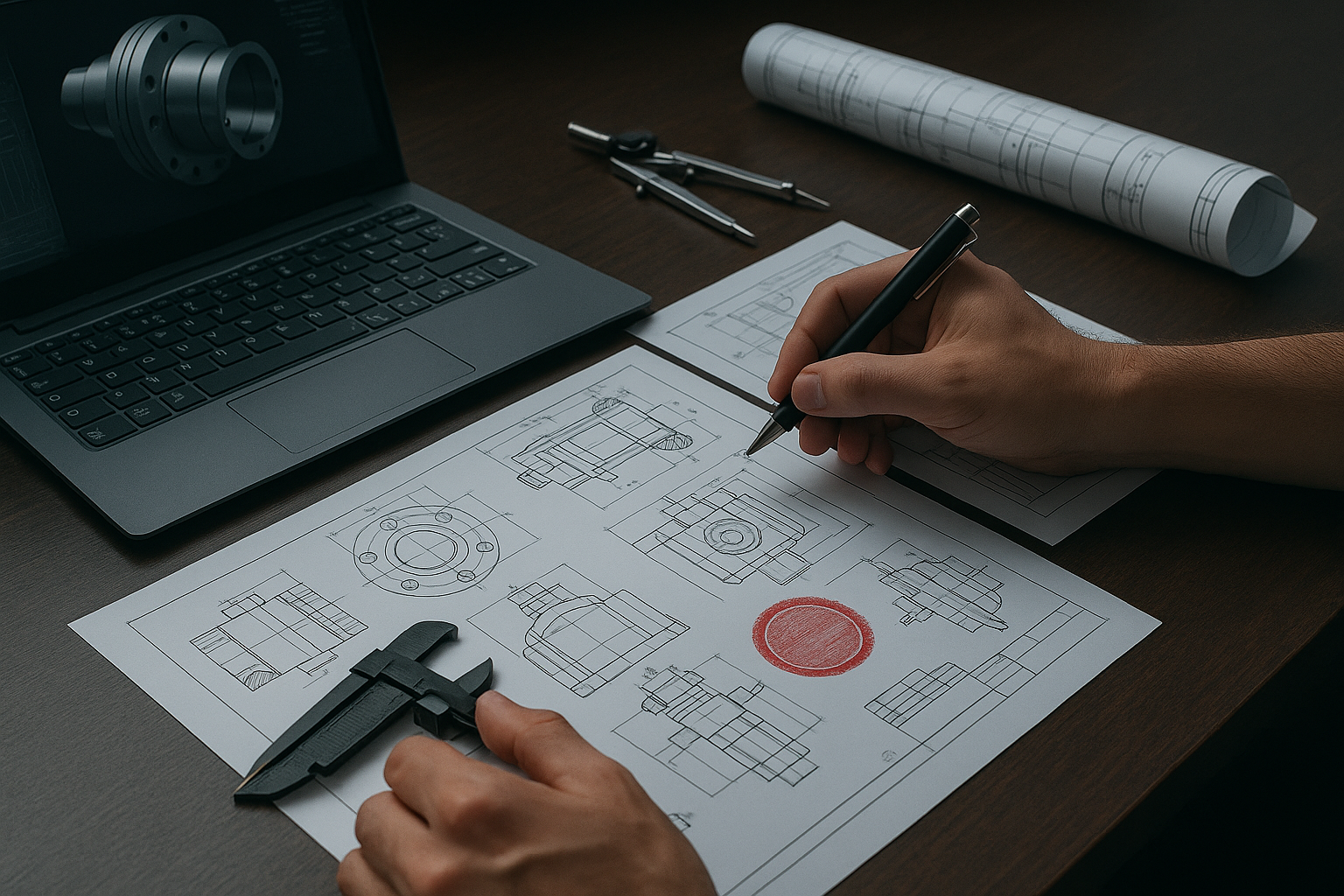
HITE Engineering provides clear, fabricator-ready drawings and documentation:
- Guard layout drawings
- Safe distance calculations
- Performance level (PLr) assessments
- Light curtain & scanner placement
- Interlock specifications
- Recommended signage and procedures
How HITE Engineering Supports Machine Guarding Projects
HITE Engineering provides a complete suite of industrial safeguarding services:
- Machine risk assessments (CSA/ISO aligned)
- Guarding audits for legacy or new equipment
- Design of fixed guards, interlocked guards, fencing, light curtains, and scanners
- Safety control system evaluations (PLr/SIL calculations)
- Robot cell safeguarding under CSA Z434 / ISO 10218
- Integration with PSRs where guarding forms part of the protective system
- Support after Ministry of Labour orders or internal audits
With structural, mechanical, electrical, and safety specialists on staff, HITE Engineering handles everything from small retrofits to full-line safeguarding upgrades.
Industries That Rely on Machine Guarding Engineers
HITE Engineering supports safeguarding projects across all industrial sectors, including:
- Automotive manufacturing
- Food and beverage processing
- Metal fabrication & machining
- Plastics, extrusion & injection molding
- Packaging lines
- Recycling facilities
- Warehousing & distribution centers
- Woodworking & mill operations
FAQ: Machine Guarding Engineers in Ontario
What does a machine guarding engineer do in Ontario?
A machine guarding engineer identifies hazards, applies Ontario’s regulatory requirements, and designs or verifies safety measures such as fixed guards, interlocks, light curtains, scanners, and fencing. Their role is to ensure compliance with OHSA, O. Reg. 851, and CSA/ISO standards.
Do I need a Professional Engineer (P.Eng.) for machine guarding?
Yes. Guarding that forms part of a protective system, impacts structural integrity, or is connected to a PSR must be reviewed or approved by a Professional Engineer licensed in Ontario. This ensures compliance and legal accountability.
Which standards apply to machine guarding?
Common standards include CSA Z432 (Safeguarding of Machinery), CSA Z434 (Robots), ISO 13849 (performance levels), IEC 62061 (safety circuits), and ANSI B11. A qualified engineer will know which apply to your equipment.
Can HITE Engineering design and review guarding?
Yes. HITE Engineering provides risk assessments, guarding design, safe distance calculations, control system evaluations, layout drawings, and PSR integration. Our engineers deliver complete, fabricator-ready packages.
Does HITE Engineering install machine guarding?
HITE provides independent engineering design and verification. We work with your preferred fabricators or contractors and can coordinate technical requirements to ensure guarding is installed according to our engineered specifications.
How do I start a machine guarding project?
Begin by gathering basic machine information — photos, manuals, and layout drawings. Then contact HITE Engineering to discuss your goals. We will propose a clear scope, timeline, and engineered safeguarding plan.
Need a Machine Guarding Engineer in Ontario?
If you need a machine guarding engineer in Ontario who understands both compliance and production, HITE Engineering provides licensed, independent, engineering-led safeguarding solutions for every industry.
Contact HITE Engineering to schedule a machine guarding assessment, discuss a specific machine, or plan a full plant-wide safety upgrade.