
Flammable Vapour Control & Ventilation Requirements

Flammable Vapour Control & Ventilation Requirements: Ensuring Safety and Compliance
Flammable vapours pose one of the most significant risks in industrial and commercial facilities. Poor ventilation or improper vapour control can lead to dangerous concentrations, creating the potential for explosions, fires, and worker injuries. At HITE Engineering, we provide engineered evaluations to ensure your ventilation systems meet the requirements of the Ontario Fire Code, OHSA, and relevant NFPA standards.
Understanding Flammable Vapours
The behaviour of vapours depends on whether they are lighter or heavier than air:
- Lighter-than-air vapours: such as hydrogen or methane, rise and accumulate near ceilings.
- Heavier-than-air vapours: such as propane, butane, and many solvents, settle near floors, pits, or confined spaces.
This difference directly impacts how ventilation systems must be designed and evaluated to mitigate risks.
Ventilation Requirements for Flammable Vapours
Effective ventilation is essential to prevent the accumulation of hazardous vapours. Key requirements include:
- NFPA 30: Governs flammable and combustible liquids, including ventilation needs in storage and handling areas.
- NFPA 497: Provides guidance on the classification of flammable gases and vapours for proper ventilation and electrical equipment use.
- Ontario Fire Code: Requires engineered controls for flammable vapour hazards.
Best practices include:
- Floor-level exhaust for heavy vapours
- High-level exhaust for light vapours
- Fans of spark resistant construction and ducting made of non combustible materials where required
- Proper air exchange rates and monitoring systems
Engineering Evaluation Process
At HITE, our evaluation process ensures your systems meet both legal and engineering requirements. This includes:
- Identifying vapour types and densities
- Analyzing facility layouts, including pits and mezzanines
- Calculating airflow and exhaust rates
- Checking for ignition sources and potential accumulation zones
- Providing mitigation measures and compliance solutions
Common Compliance Gaps
Many facilities fall short due to:
- Using general exhaust instead of vapour-specific systems
- Poor placement of exhaust fans and ducts
- Lack of engineered review during process changes
- Failure to account for vapour density
These oversights increase liability and risk, but they are preventable with proper engineering evaluations.
How HITE Engineering Can Help
HITE Engineering provides:
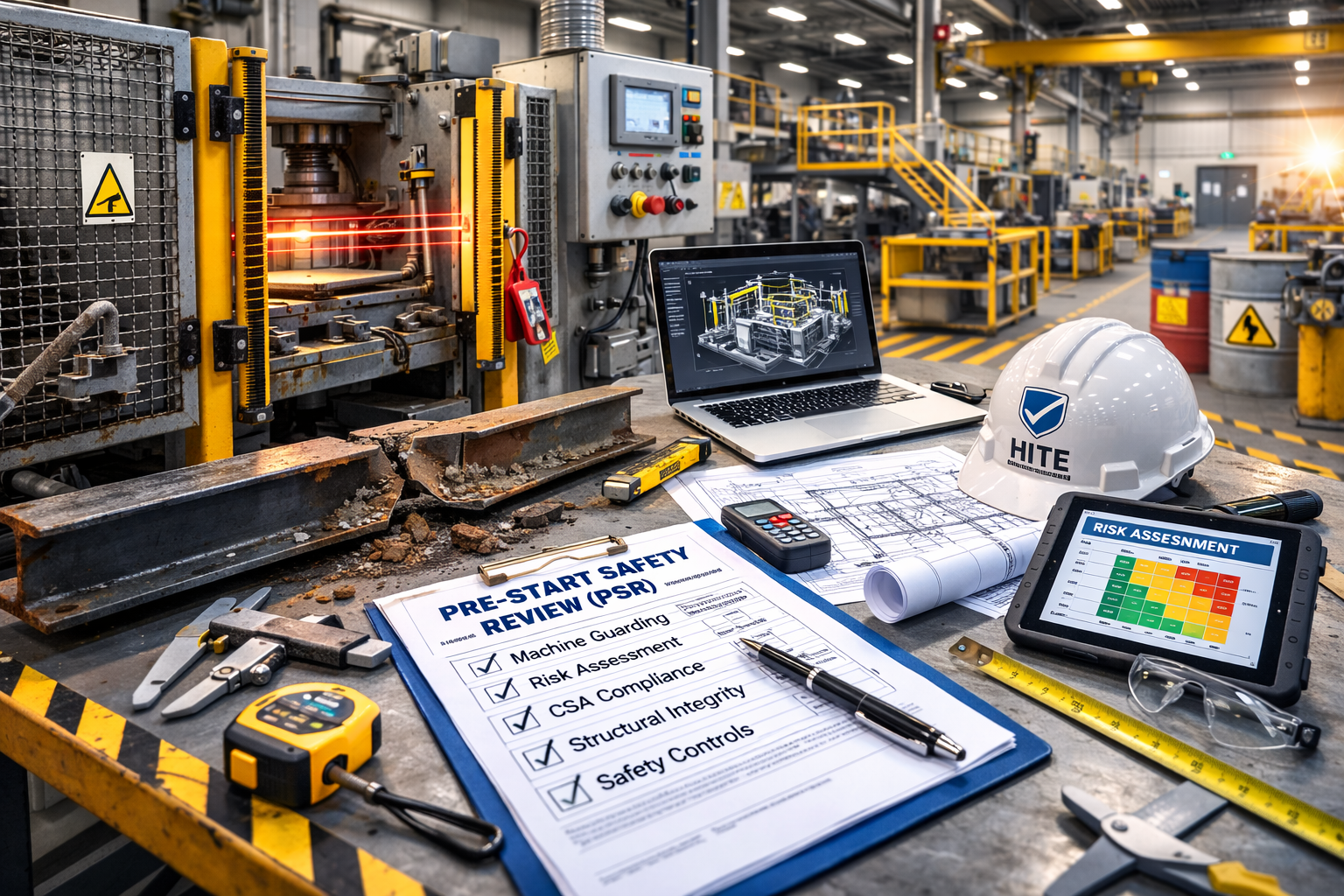
- Pre-Start Health & Safety Reviews (PSRs) under Ontario Regulation 851
- Ventilation system compliance evaluations
- Fire Code and Building Code assessments
- Signed and sealed engineering reports
Learn more about our PSR and compliance services to ensure your facility is safe, compliant, and protected against vapour hazards.
FAQ: Flammable Vapour Control & Ventilation
What are flammable vapours?
Flammable vapours are gases released from volatile liquids or substances that can ignite when mixed with air. Their density (lighter or heavier than air) determines where they accumulate and how they must be controlled.
Why does vapour density matter?
Vapour density determines whether vapours rise to the ceiling or settle near the floor. Ventilation must be designed accordingly to capture and remove vapours from these zones before they reach dangerous concentrations.
What standards govern flammable vapour control in Ontario?
Key standards include the Ontario Fire Code, OHSA requirements, NFPA 30 for flammable liquids, and NFPA 497 for classification of vapours. Compliance with these is essential for safety and legal operation.
How often should ventilation systems be evaluated?
Ventilation systems should be reviewed whenever new equipment, processes, or materials are introduced — and inspected periodically to ensure continued compliance and safety.
Who can perform a flammable vapour ventilation assessment?
Only qualified engineers with experience in Fire Code, OHSA, and NFPA standards should conduct these evaluations. At HITE, all reports are signed and sealed by licensed Professional Engineers.
What happens if my facility is non-compliant?
Non-compliance can result in Ministry of Labour orders, fines, increased liability, and increased risk of fire or explosion. An engineering evaluation provides corrective actions to achieve compliance.